By Theo Bouchard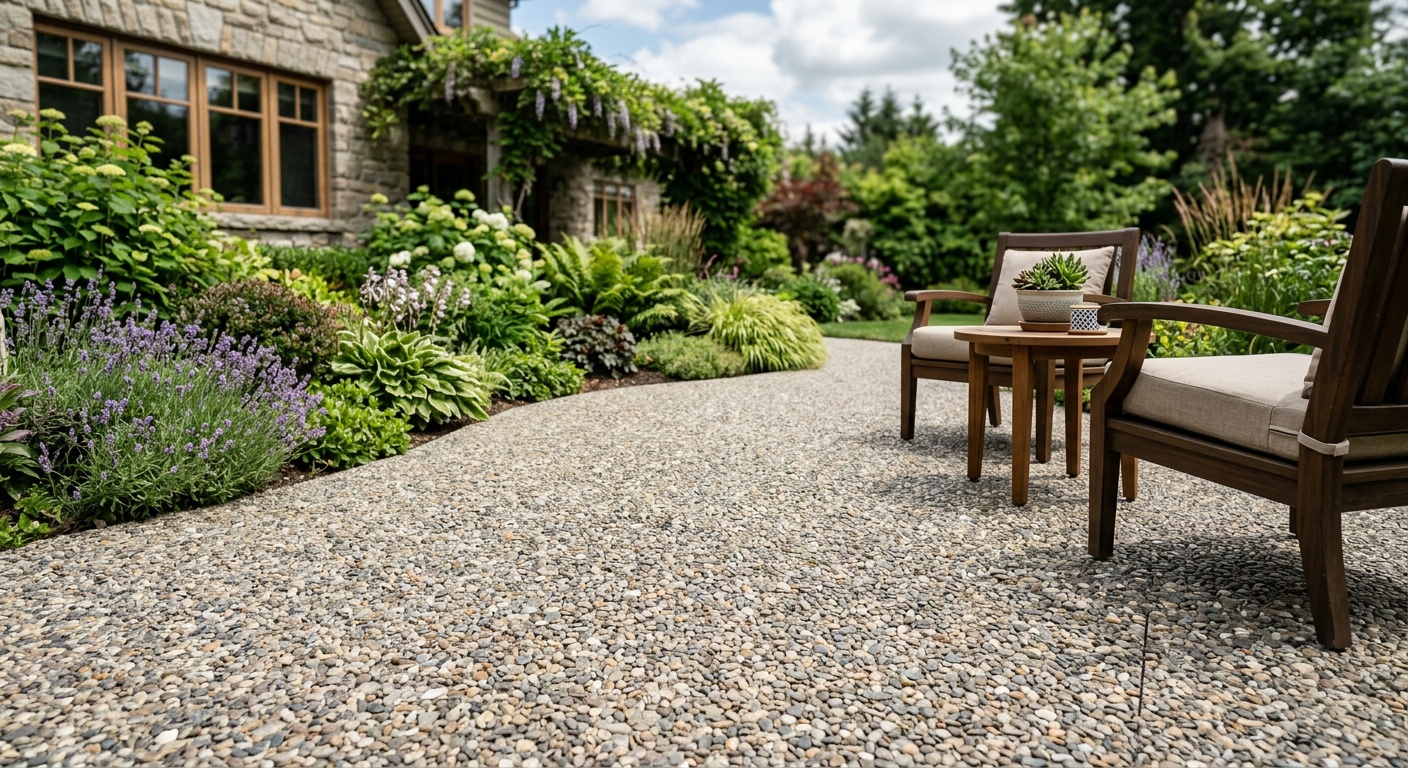
Exposed Aggregate vs Stained Concrete: Choosing the Right Finish for Your Outdoor Kitchen Patio
Reading time: 8 minutes
You’ve finally committed to building that outdoor kitchen you’ve been pinning on mood boards since 2023. The grill is picked out, the countertop material is chosen, and then—bam—you hit a wall nobody warned you about: what do you actually pour underneath it all? If you’re stuck choosing between exposed aggregate and stained concrete, you’re facing one of the most consequential (and most overlooked) decisions in outdoor living design.
This isn’t just an aesthetic choice. It’s about grease resistance, slip safety near hot grills, heat retention under Arizona sun, and how the surface ages after three summers of burger drippings and bare feet. Let’s dig into what actually matters.
Table of Contents
- Understanding the Basics
- Exposed Aggregate: Texture with a Purpose
- Stained Concrete: The Design Chameleon
- Head-to-Head Comparison
- Common Challenges and Fixes
- Real-World Examples
- FAQs
- Your Patio Decision Roadmap
Understanding the Basics
Both exposed aggregate and stained concrete start with the same base material—a standard concrete slab. Where they diverge is in the finishing process, and that divergence changes everything about how the surface performs around an outdoor kitchen.
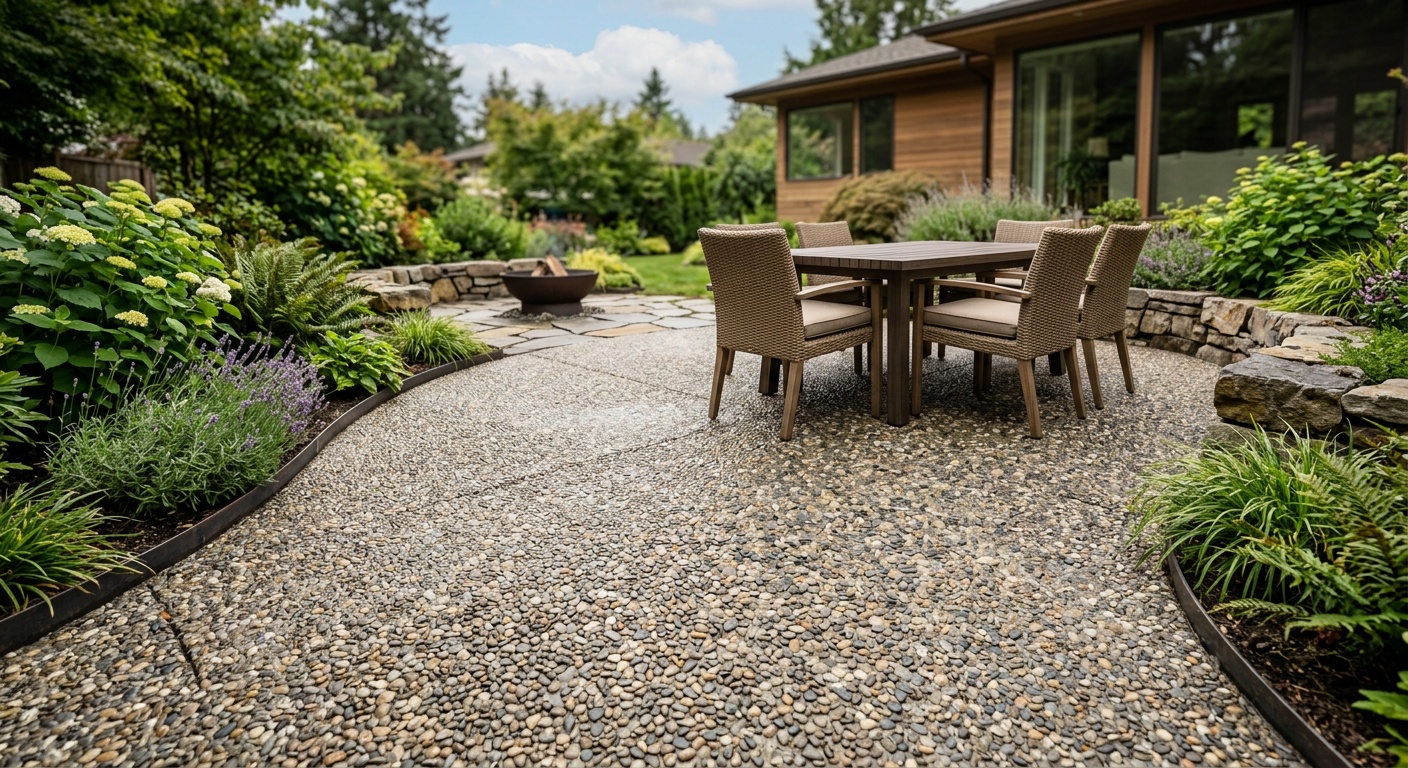
Exposed aggregate involves washing away the top layer of cement paste while the concrete is still curing, revealing the stones, pebbles, or decorative aggregate embedded within. The result is a naturally textured, slip-resistant surface that looks like it belongs outdoors.
Stained concrete takes a smooth (or lightly textured) slab and applies acid-based or water-based stains to create color variation—everything from warm terracotta to deep charcoal. It’s often paired with a sealer and sometimes a decorative saw-cut pattern to mimic tile or stone.
According to the Portland Cement Association’s 2025 residential materials survey, decorative concrete installations for outdoor living spaces grew by roughly 14% year-over-year, with exposed aggregate and stained finishes together accounting for nearly 60% of that segment. Homeowners are clearly leaning into concrete’s versatility rather than defaulting to pavers or natural stone.
Exposed Aggregate: Texture with a Purpose
Picture this: it’s July, your grill is throwing off heat, someone just spilled a marinade tray, and your nephew is running around barefoot. This is exactly the scenario exposed aggregate was built for.
Why Contractors Recommend It Near Grills and Fire Features
The textured surface created by exposed stones provides natural slip resistance—critical near cooking zones where grease, water, and condensation are constant companions. Landscape architect Maria Chen, who has designed over 200 outdoor kitchens in the Southwest, puts it bluntly: “I won’t specify smooth stained concrete within six feet of a cooktop or grill island. It’s a liability waiting to happen. Exposed aggregate solves that problem without sacrificing curb appeal.”
Beyond safety, exposed aggregate hides stains remarkably well. Oil splatters, wine drips, and charcoal dust blend into the natural variation of the stones rather than sitting visibly on a flat colored surface.
The Trade-offs You Should Expect
It’s not all upside. Exposed aggregate is rougher underfoot, which matters if you’re barefoot by the pool or have young kids who fall often. It also tends to run 10-20% more expensive than a basic stained slab due to the labor-intensive washing and sealing process. And once it’s in, it’s in—customizing the look later (say, adding a stamped pattern) isn’t really an option.
Stained Concrete: The Design Chameleon
If exposed aggregate is the practical workhorse, stained concrete is the design showpiece. It offers nearly unlimited color customization, letting homeowners match a patio to their home’s stucco tone, their cabinetry, or a Mediterranean-inspired color palette.
Where Stained Concrete Wins
Stained concrete shines in lounge areas, dining patios, and transition zones away from direct grease exposure. It’s smoother, easier to clean with a simple hose-down, and more comfortable for furniture placement since chair legs won’t wobble on uneven texture. Acid-stained concrete in particular develops a mottled, marbled effect that many designers compare favorably to natural stone—at roughly a third of the cost.
Managing the Slip and Stain Risks
The catch is durability in high-traffic cooking zones. Grease can penetrate an improperly sealed stained surface, and once a stain sets into porous concrete, it’s notoriously stubborn to remove. The fix most contractors now recommend for 2026 installs is a two-part approach: apply a penetrating sealer rated for UV and oil resistance, then add a slip-resistant additive (like polymer grit) specifically in the three-to-five-foot zone directly around cooking appliances.
Head-to-Head Comparison
| Metric | Exposed Aggregate | Stained Concrete |
|---|---|---|
| Average Cost (per sq ft, 2026) | $10 – $18 | $7 – $15 |
| Slip Resistance | High | Moderate (with additives) |
| Stain/Grease Concealment | Excellent | Fair to Good |
| Barefoot Comfort | Low | High |
| Resealing Frequency | Every 3-5 years | Every 2-3 years |
Visualizing Homeowner Satisfaction by Zone
A 2025 survey of 340 homeowners by an outdoor living trade publication asked which finish they’d choose again for specific patio zones. Here’s how satisfaction broke down for the cooking/grill zone specifically:
The pattern is clear: each finish has a “home turf.” Exposed aggregate dominates near the grill; stained concrete dominates where people relax.
Common Challenges and How to Overcome Them
Challenge 1: Heat Absorption in Sun-Heavy Climates
Dark stained concrete can reach surface temperatures uncomfortable for bare feet in peak summer—sometimes exceeding 140°F in desert climates. The fix: choose lighter stain tones (tans, soft grays) for sun-exposed areas, or add a shade structure over the primary patio zone. Exposed aggregate, thanks to its lighter, varied stone tones, typically runs 10-15 degrees cooler on the surface.
Challenge 2: Grease Penetration and Long-Term Staining
Both finishes need proactive sealing, but stained concrete is more vulnerable because grease sits on a flatter surface longer before it’s noticed. Pro tip: reseal cooking-zone stained concrete annually instead of the standard two-to-three-year cycle, and keep a degreasing concrete cleaner on hand rather than generic dish soap, which can dull the sheen over time.
Challenge 3: Cracking Near Heat Sources
Concrete slabs poured too close to built-in fire features without proper control joints can crack from thermal cycling. Both finishes are equally susceptible here—the fix isn’t finish-dependent but installation-dependent. Insist your contractor places control joints within 18 inches of any fire feature or grill island footing.
Real-World Examples
Case Study 1 – Scottsdale, AZ (2025 build): A family installed a 600-square-foot outdoor kitchen patio using exposed aggregate throughout, prioritizing slip resistance for a pool-adjacent grill station. After one year, the homeowner reported zero visible grease stains despite weekly grilling, though she noted needing pool slides for kids due to the texture.
Case Study 2 – Austin, TX (2026 build): A couple split their 450-square-foot patio into two zones: charcoal-gray stained concrete for the dining and lounge area, exposed aggregate for a 100-square-foot cooking pad around their built-in smoker. This hybrid approach, increasingly popular per 2026 contractor surveys, delivered both comfort and function without compromising on either.
Case Study 3 – Charlotte, NC: A homeowner initially chose fully stained concrete to match their home’s warm beige exterior but experienced a stubborn grease stain within four months near their propane grill. They retrofitted the cooking zone with a broadcast aggregate topping—a budget-friendly way to add texture after the fact, costing about $6 per square foot for the affected area.
Frequently Asked Questions
Can I combine both finishes on the same patio?
Absolutely, and it’s becoming the go-to strategy in 2026 designs. Most contractors recommend exposed aggregate within a 5-8 foot radius of the grill or cooktop, transitioning to stained concrete for dining and lounge areas. A saw-cut border or metal edging strip creates a clean visual transition between the two.
Which finish costs less to maintain over 10 years?
Exposed aggregate typically wins long-term because it requires resealing less frequently (every 3-5 years versus 2-3 for stained) and conceals wear better, delaying the need for cosmetic refinishing. However, stained concrete’s lower upfront installation cost can offset this if your maintenance discipline is strong.
Is either finish suitable for colder climates with freeze-thaw cycles?
Both can perform well if installed with proper air-entrained concrete mix and adequate drainage slope (a minimum 2% grade away from structures). Exposed aggregate has a slight edge because its textured surface handles ice formation more predictably, but neither finish is freeze-thaw-proof without correct base preparation.
Your Patio Decision Roadmap
Choosing between exposed aggregate and stained concrete doesn’t have to be an all-or-nothing decision, and honestly, the smartest outdoor kitchens built in 2026 rarely pick just one. Here’s how to move forward:
- Step 1: Map your patio into functional zones—cooking, dining, lounging—before choosing any finish.
- Step 2: Default to exposed aggregate within 5-8 feet of any heat source or grill for safety and stain concealment.
- Step 3: Use stained concrete for social zones where comfort and design cohesion matter more than grease resistance.
- Step 4: Budget for annual resealing in cooking zones regardless of which finish you choose.
- Step 5: Ask your contractor about hybrid installations with saw-cut transitions—it’s the fastest-growing trend in outdoor kitchen hardscaping this year.
As outdoor living spaces continue merging with full-scale kitchen functionality, the flooring beneath your feet is no longer an afterthought—it’s infrastructure. Whether you lean toward the rugged practicality of exposed aggregate or the customizable warmth of stained concrete, the right choice is the one that matches how you actually use your space, not just how it photographs.
So, before you sign off on that concrete order, ask yourself: where will the grease actually fall, and where will your family actually gather? Let that answer guide your finish, zone by zone.